

Super Intelligence: The New Name for AI?

Note: The views expressed in this text are solely those of the author and do not necessarily reflect the position of this website.
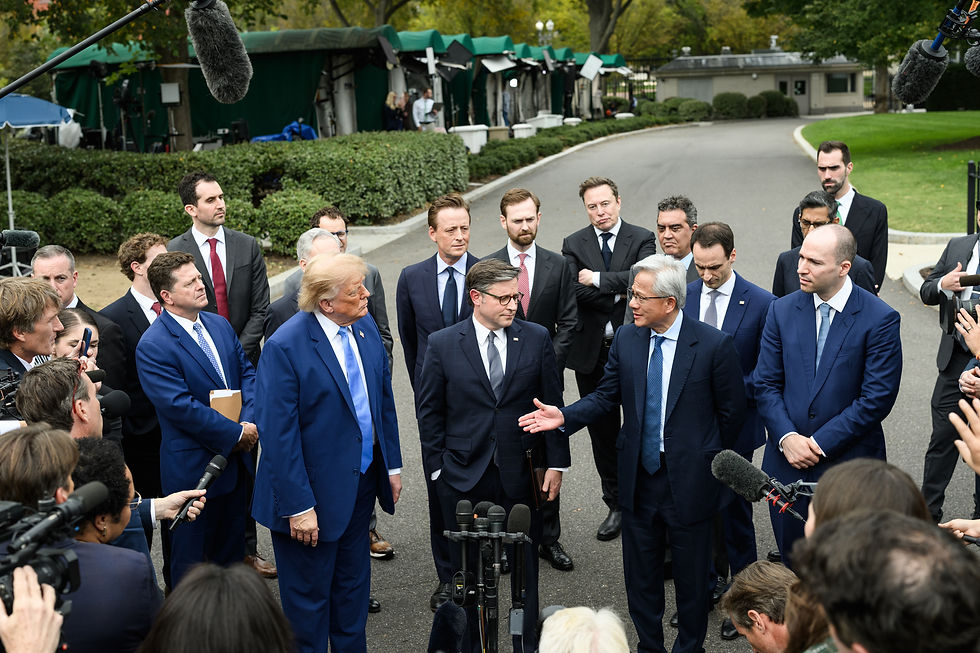
Super Intelligence: The New Name for AI? The new American executive order that mandates the replacement, in Executive Branch documents, of Artificial Intelligence (AI) with Super Intelligence (SI). According to the text, the United States is facing a new technological revolution and remains at the forefront of artificial intelligence development. Current systems, Trump argues, have already surpassed what was traditionally understood as artificial intelligence, expanding human creativity and enabling advances that were previously considered impossible. Therefore, Super Intelligence would be a more appropriate expression to describe the current and future stage of these technologies. In other words, if the technology has advanced, the language should advance as well.
Is it really necessary to change the name?
The order does not create a new technology, does not immediately alter the legal definition of artificial intelligence, and does not, by itself, establish a new generation of systems. In practice, it directs the U.S. Executive Branch to call Super Intelligence what the law still defines as Artificial Intelligence. The political significance of the change, therefore, may be more relevant than its immediate technological effect.
The text presents the United States as the birthplace of modern artificial intelligence and emphasizes its culture of innovation, companies, universities, and entrepreneurial spirit. Indeed, the United States plays a central role in the development of computing, artificial intelligence research, and, currently, some of the most important companies in the sector. But there is a difference between being at the forefront of a technology and defining the meaning of its next stage on its own.
The change in terminology carries an implicit message of framing this development as a new frontier in which the United States intends to once again present itself as a leading actor, almost as a form of technological power projection. And this matters because technology today is directly connected to productivity, defense, infrastructure, industry, education, energy, finance, science, and state capacity. The competition for leadership in artificial intelligence has become part of a broader competition over the ability to define technological standards, control value chains, and influence the economy of the future. In this context, choosing the name of the next era can also be a way of symbolically occupying the position of the one who leads it.
Narrative, Capacity, and China
Changing AI to SI does not build data centers, produce semiconductors, reduce dependence on foreign supply chains, automatically increase the energy capacity required to power increasingly large models, train engineers, create researchers, build power grids, chip factories, energy storage systems, or computing infrastructure. Nor does it guarantee that the United States will remain in the lead, because technological competition is not won by the terminology used to describe it, but by productive capacity, scientific research, capital, infrastructure, talent, energy, access to strategic minerals, semiconductors, industrial capacity, and, above all, the ability to scale innovation.
That is precisely why China cannot be left out of the discussion.
China has built enormous industrial and technological capacity over decades, becoming one of the world's major centers for electronics manufacturing while holding a particularly important position in various supply chains and investing heavily in digital infrastructure, energy, research, and development. In the field of artificial intelligence, Beijing has also established long-term strategic objectives and developed its own ecosystem of companies, universities, and research centers.
This does not mean that China has surpassed the United States in every aspect of artificial intelligence; such a conclusion would be simplistic. The two countries have different advantages, and their relative positions in particular technologies are changing rapidly. But precisely because of this, the competition is much broader than the ability of an American company to produce a more sophisticated model.
There is a certain irony in attempting to declare a new technological era by changing its name. If the United States is truly inaugurating a new phase of artificial intelligence, the most convincing demonstration of that leadership should be the ability to build the infrastructure of this new era. Any country seeking to lead the next generation of technology will likely need more electricity, more semiconductors, greater industrial capacity, more basic research, more engineers, more competitive universities, and more resilient supply chains. It will also need to address the question of how to preserve its technological leadership without becoming excessively dependent on components produced beyond its borders. This is a much more concrete problem than deciding whether the technology should be called Artificial Intelligence or Super Intelligence.
The Name May Matter, But Not in the Way Imagined
Words shape public policy, influence expectations and investments, and affect how governments frame particular phenomena. If Super Intelligence is used to represent systems significantly more advanced than what we currently call AI, there may be some value in developing specific terminology. The problem lies in presenting this change as though it, by itself, represented the arrival of a new era. There is a difference between naming a transformation and producing the transformation. The former can be done by decree; the latter requires years, and perhaps decades, of investment.
If the American intention is to compete with China for technological leadership in the twenty-first century, it will be necessary to look beyond artificial intelligence companies and large models and think about an industrial policy capable of sustaining the entire ecosystem. The true frontier of artificial intelligence may lie less in the chatbot that answers a question and more in the invisible infrastructure that makes billions of answers possible. That is where much of the competition between the United States and China will be decided.
I assume that the United States has concrete reasons to claim a central position in the development of artificial intelligence. But technological leadership is not a permanent title, since it must be constantly reproduced. The history of technology is full of countries and companies that stood at the forefront of a revolution and later lost ground to new competitors. The pioneering position of one generation does not guarantee the leadership of the next.
Therefore, let us consider: "What do the United States need to do so that, ten or twenty years from now, they can still claim to be at the forefront?" If the answer is concentrated in a new word, there will be little to celebrate. But if it lies in laboratories, semiconductor factories, power grids, universities, research centers, supply chains, and industrial capacity, then the change in name will be nothing more than a detail. Because no power becomes a technological leader by decree, and certainly not through vocabulary.


Comments